Mar 13, 2026
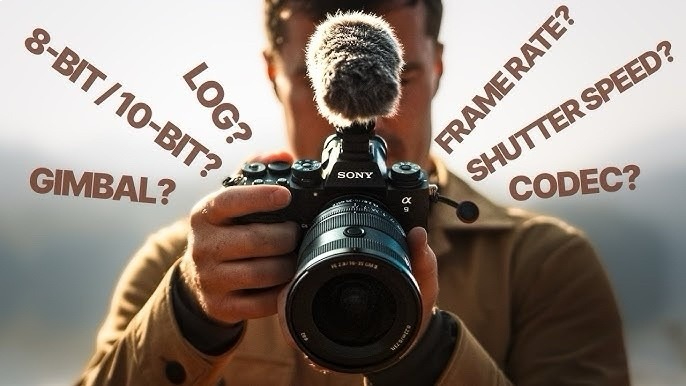
Have you ever watched a cinematic masterpiece and wondered how a single person with a camera could capture so much emotion in a single frame? In the digital age, video is no longer just a hobby; it is the dominant language of the internet. Whether you want to film weddings, create high-end commercial content, or launch a YouTube empire, the journey starts with a structured videography course.
The Australian creative landscape is booming. According to the Australian Government's National Careers Institute, the demand for Artistic Directors, Media Producers, and Video Professionals is projected to remain steady, with thousands of Australians currently employed in "Arts and Recreation Services"—a sector that continues to evolve as digital media takes centre stage (Source: Labour Market Insights). To stand out in this competitive field, simply owning a camera isn't enough; you need the technical finesse and storytelling prowess that only a professional videography course can provide.
The foundation of any visual medium is light. In your initial training, you will master the "Exposure Triangle": Aperture, Shutter Speed, and ISO. You will learn why a low f-stop is essential for that creamy "bokeh" background and how shutter speed must be doubled relative to your frame rate (the 180-degree rule) to achieve natural motion blur.
Auto-focus has come a long way, but true cinema is crafted in manual. A comprehensive videography course teaches you how to "pull focus" to guide the viewer’s eye. You will learn how sensor size—whether Full Frame, Super 35, or Micro Four Thirds—impacts your depth of field and how to use it to isolate subjects from distracting backgrounds.
A beautiful shot is useless if it doesn't move the story forward. You will explore the Rule of Thirds, Leading Lines, and Symmetrical Composition. More importantly, you will learn the "Five-Shot Rule"—capturing a close-up of hands, a close-up of the face, a medium shot, an over-the-shoulder shot, and an establishing shot—to ensure you have enough coverage to tell a coherent story in the edit.
Beginners often focus on the picture, but pros focus on the sound. In a professional videography course, you will learn the difference between shotgun microphones, lavaliers, and condensers. You’ll understand how to monitor levels to avoid "clipping" and how to record "room tone" to ensure seamless audio transitions during post-production.
Lighting is the difference between a "home movie" and a professional production. You will be trained in the classic Three-Point Lighting setup: the Key Light (main source), the Fill Light (reducing shadows), and the Back Light (separating the subject from the background). Learning how to use natural Australian sunlight or softboxes effectively is a core pillar of any serious videography course.
The equipment used for a fast-paced sports documentary is vastly different from a controlled studio interview. You will gain hands-on experience with various rigs, from handheld gimbals for smooth tracking shots to tripods with fluid heads for cinematic pans. Understanding your gear allows you to stop worrying about buttons and start focusing on the creative vision.
Should you shoot in 24fps, 30fps, or 60fps? You will learn that 24fps provides that "cinematic" look we associate with movies, while higher frame rates like 60fps or 120fps are essential for crisp slow-motion. A quality videography course will also demystify resolutions like 4K and 6K, teaching you when the extra pixels are necessary and when they just waste hard drive space.
Color evokes emotion. You will learn about "White Balance" to ensure your skin tones look natural under different light temperatures (measured in Kelvin). Beyond the basics, you’ll be introduced to Log profiles—flat, desaturated footage that allows for professional colour grading in post-production, giving your work a distinct, stylised look.
The "magic" happens in the edit suite. You will learn to navigate software like Adobe Premiere Pro or DaVinci Resolve. From "J-cuts" and "L-cuts" to basic transitions and sound design, this stage of a videography course turns raw clips into a polished narrative. You will also learn about "proxy workflows" to edit high-resolution footage on standard laptops.
Knowledge is power, but a "showreel" is what gets you hired. By the end of your studies, you will have a collection of diverse projects. You will learn how to curate your best 60 seconds of footage into a high-energy reel that proves your worth to potential clients or creative agencies across Australia.
Visual Learning: Start Your Journey
If you want to see the difference between amateur and professional camera movements, check out this guide on cinematic techniques:Ultimate Guide to Camera Movement — Every Camera Movement Technique Explained
Your Future in Motion
Embarking on a videography course is more than just learning how to press "record." It is about mastering the technical precision required to capture the world exactly as you see it. From the rugged coastlines of New South Wales to the bustling urban centres of Melbourne, there is a story waiting to be told in every corner of this country.
By refining your skills in a dedicated videography course, you move past the "trial and error" phase and gain the confidence to charge professional rates for your work. You are not just a person with a camera; you are a visual architect, a storyteller, and a technician. The demand for high-quality video is only going to increase as businesses transition to video-first marketing strategies, making this one of the most future-proof skills you can acquire today.
Are you ready to stop dreaming about making movies and finally start filming them?

Find the complete details of Schools, preschools, nursery schools, infant schools in all cities and states of India at PrePrimarySchools.com. Search through the verified list of schools and check the preferred ones to get their address and contact details or have a complete preview of school at a glance.


Copyright © 2021 Pre Primary Schools . All Rights Reserved
 preprimaryschoolsindia@gmail.com


